
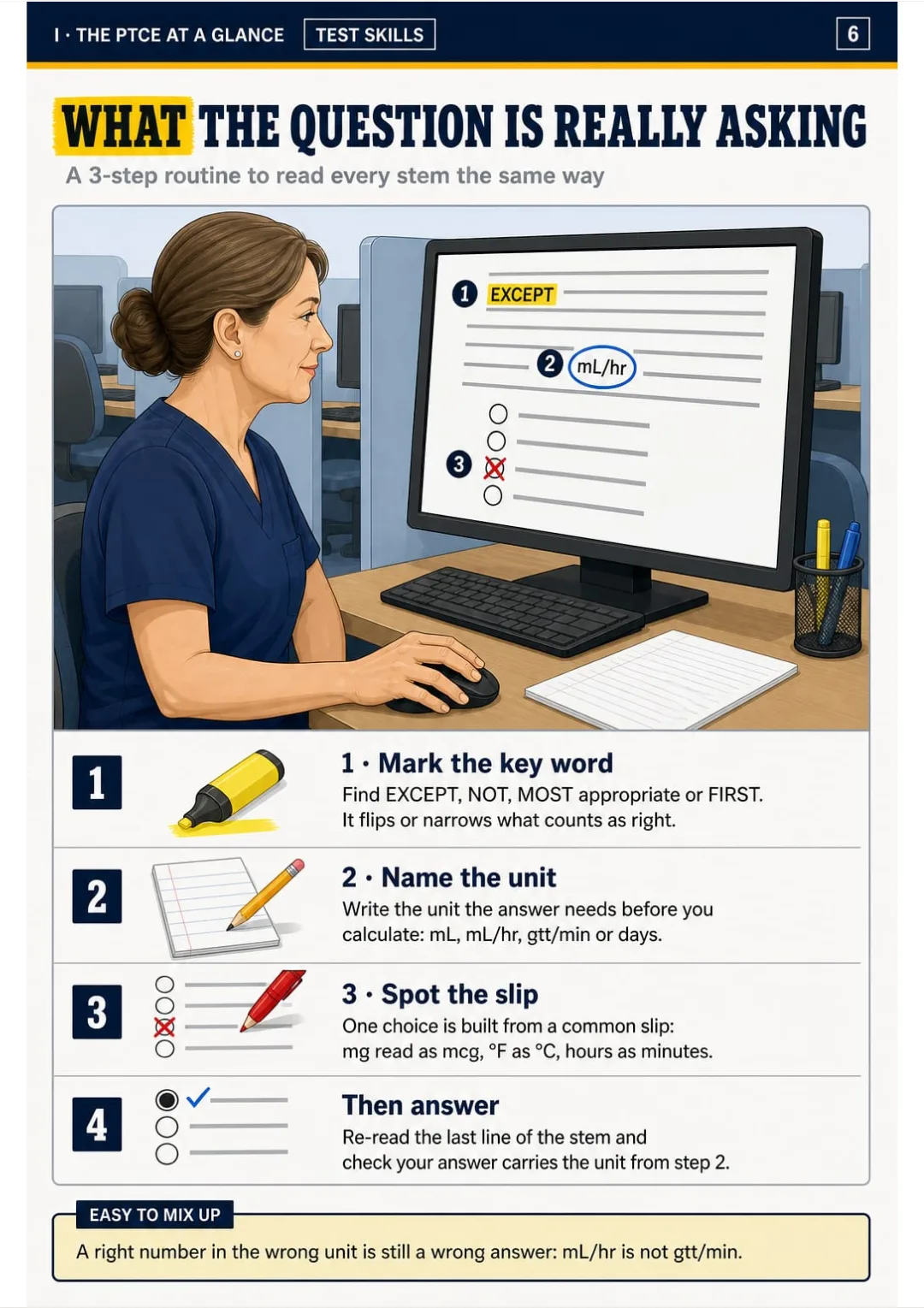
p. 6 · WHAT THE QUESTION IS REALLY ASKINGEASY TO MIX UP
A right number in the wrong unit is still a wrong answer: mL/hr is not gtt/min.
📄 Digital PDF book · read on your phone or print
Drug name stems, the five schedules, DEA forms, sigs, days supply, IV flow rates and garbing order, all from the PTCE content outline. You see the drawing first, then a short note box with the number to remember or the trap the question sets. 58 pages in 7 parts.
Price US$ 27 US$ 63
🔒 Secure checkout · PDF by email · 30-day guarantee
The same topic, explained two ways.
You're at the counter with a basket of refills, or on question twelve of a practice test. Three names look alike: which one lowers cholesterol?
So you open the manual, flip to the cardiovascular chapter and scan a table of forty drugs. Next week there's a new name, and the same search.
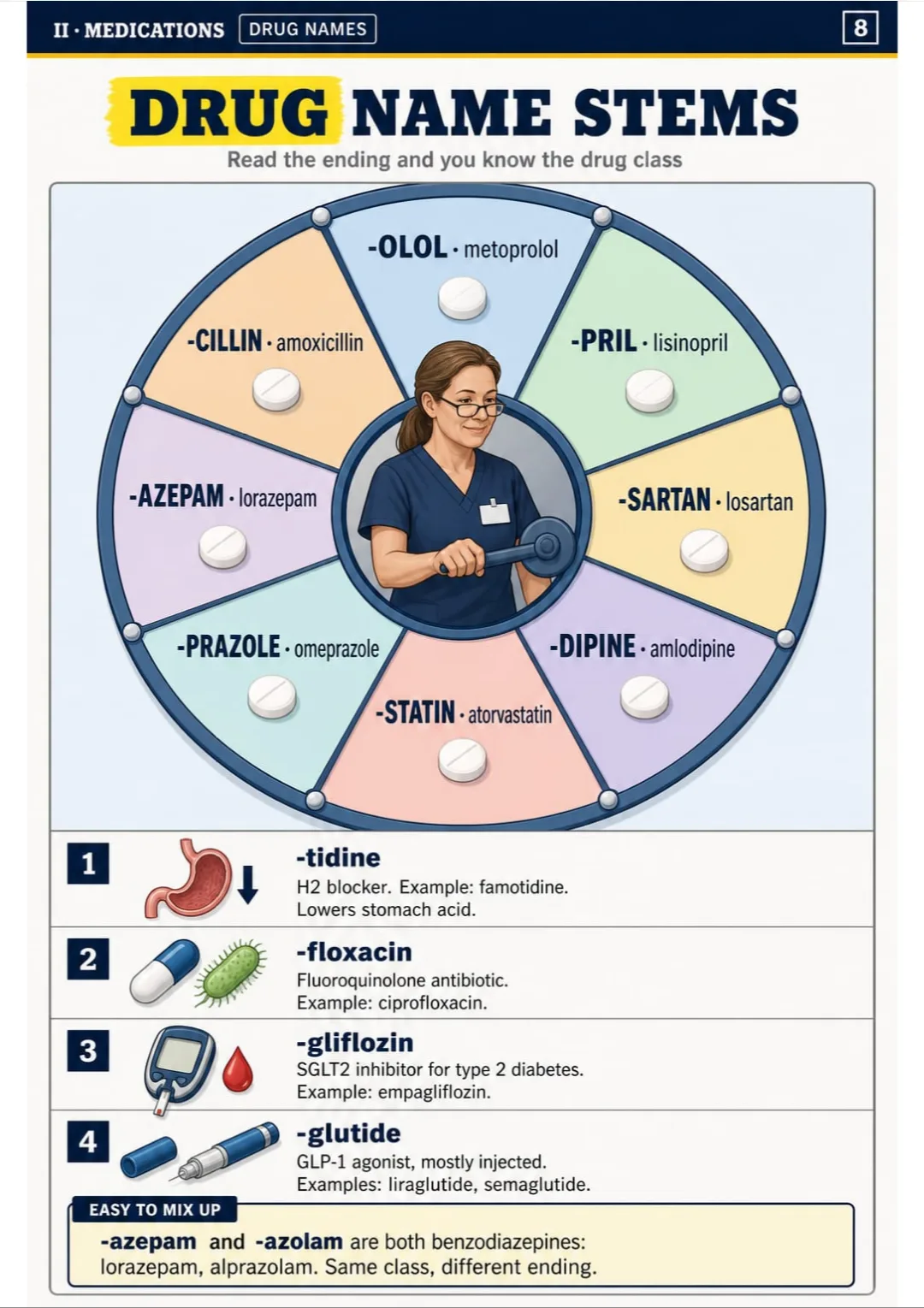
In the book, the drug name stems are one page: -olol, -pril, -sartan, -dipine, -statin and seven more, each ending drawn next to one example drug.
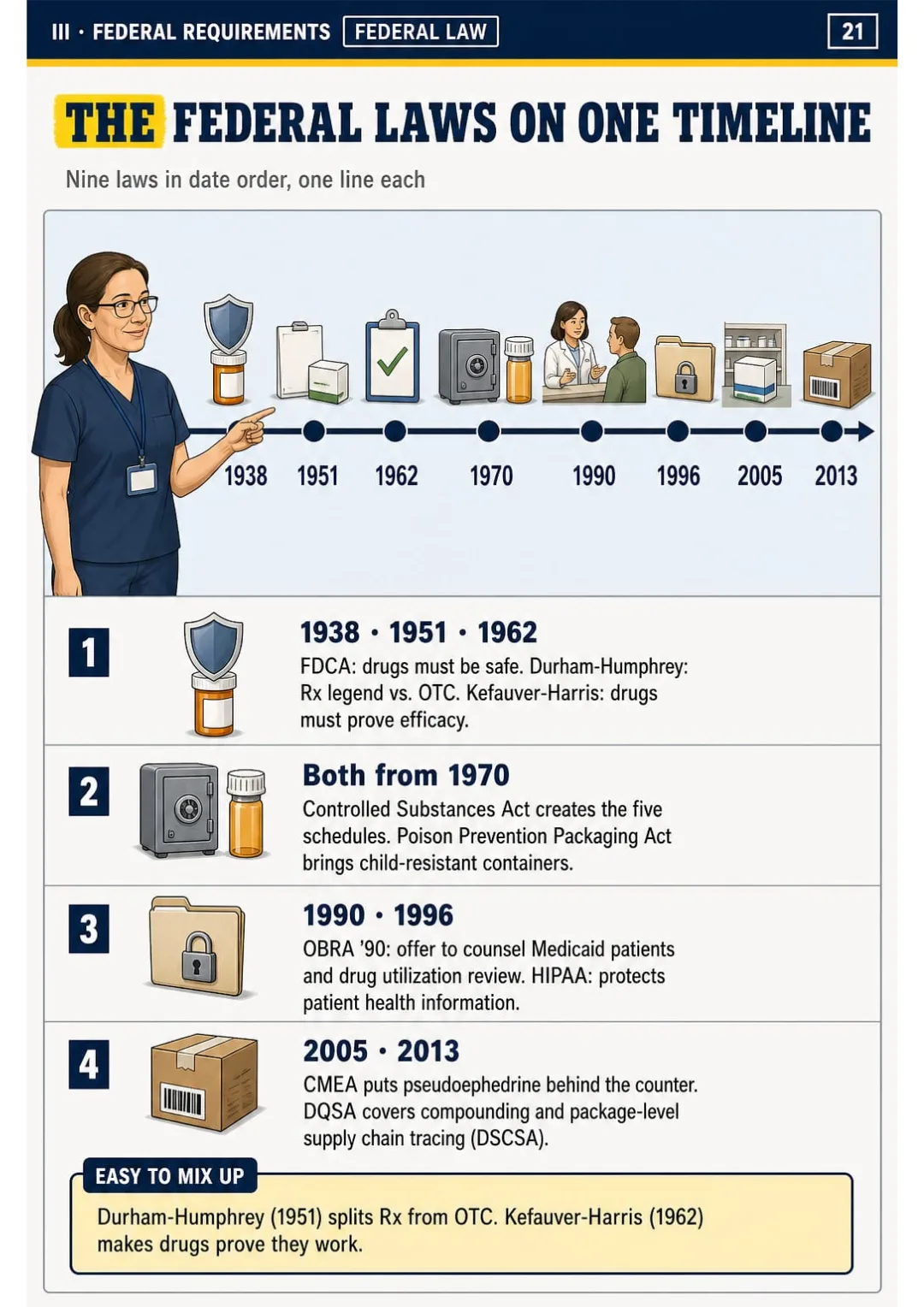
The rest works the same way: the four exam domains, the federal laws on one timeline, the do-not-use abbreviations, what a valid prescription must have. Each one has its own page.
Learn the ending once and every new name that carries it already has a family.
One big drawing per page, with a box of what to remember.
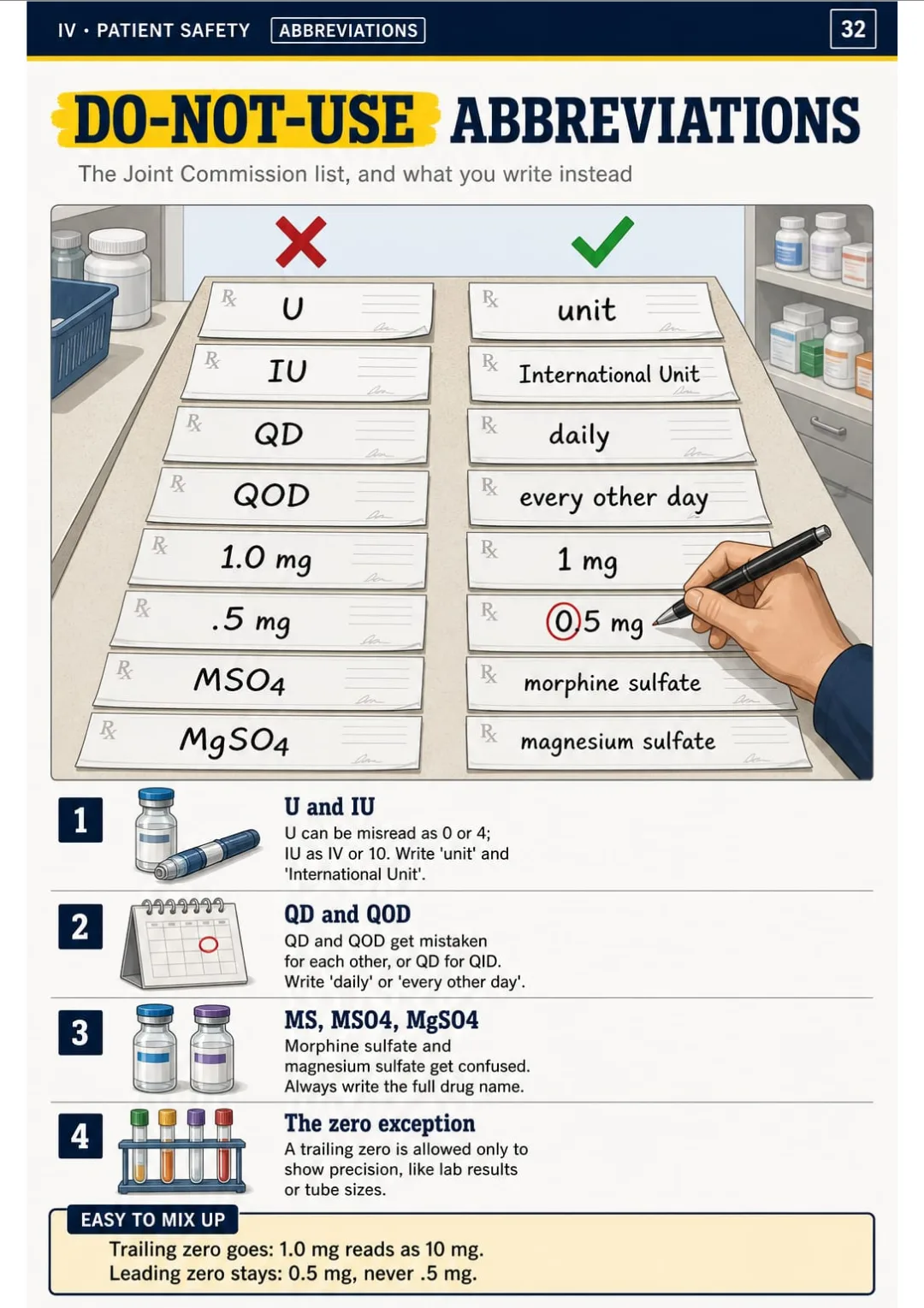
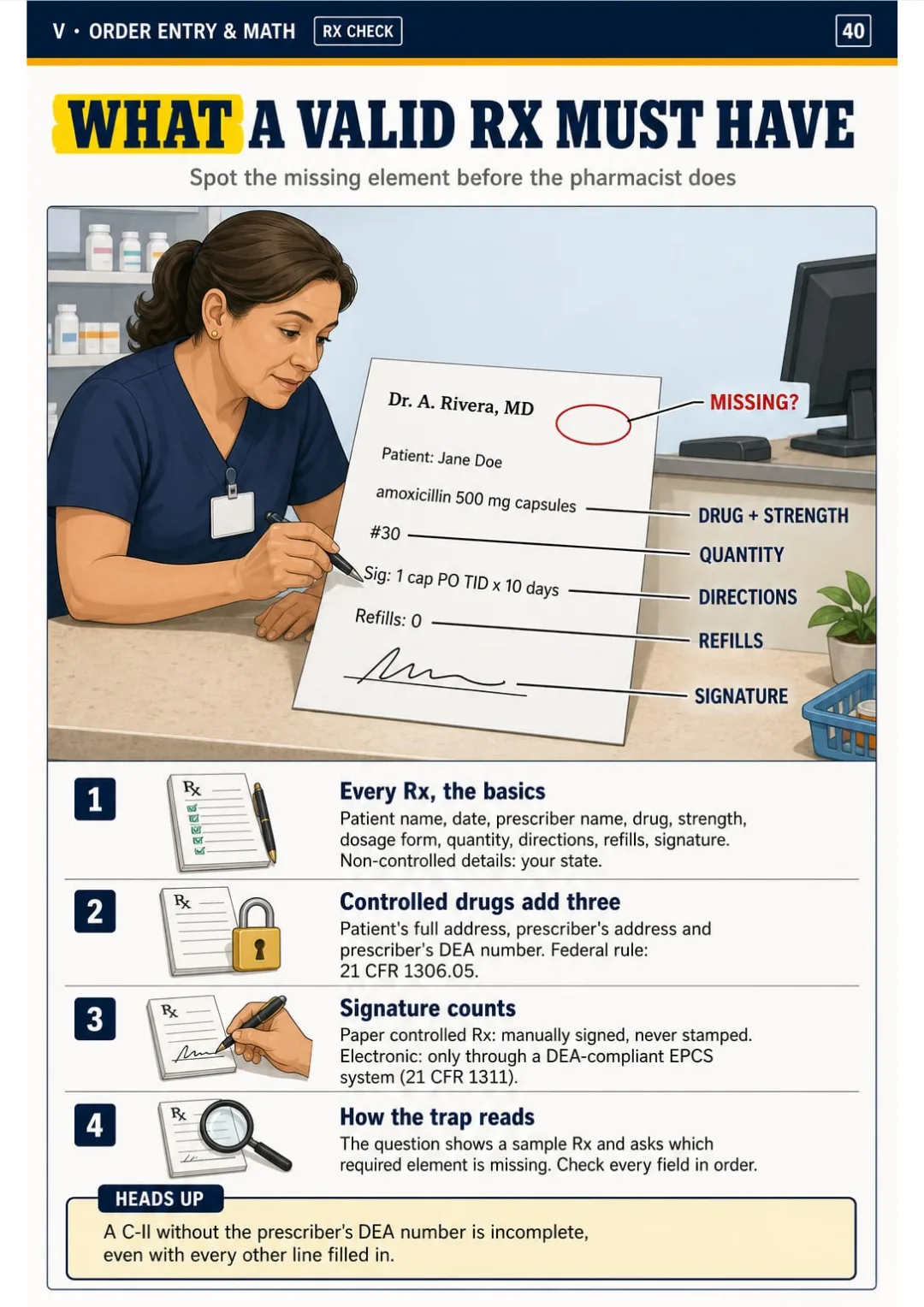
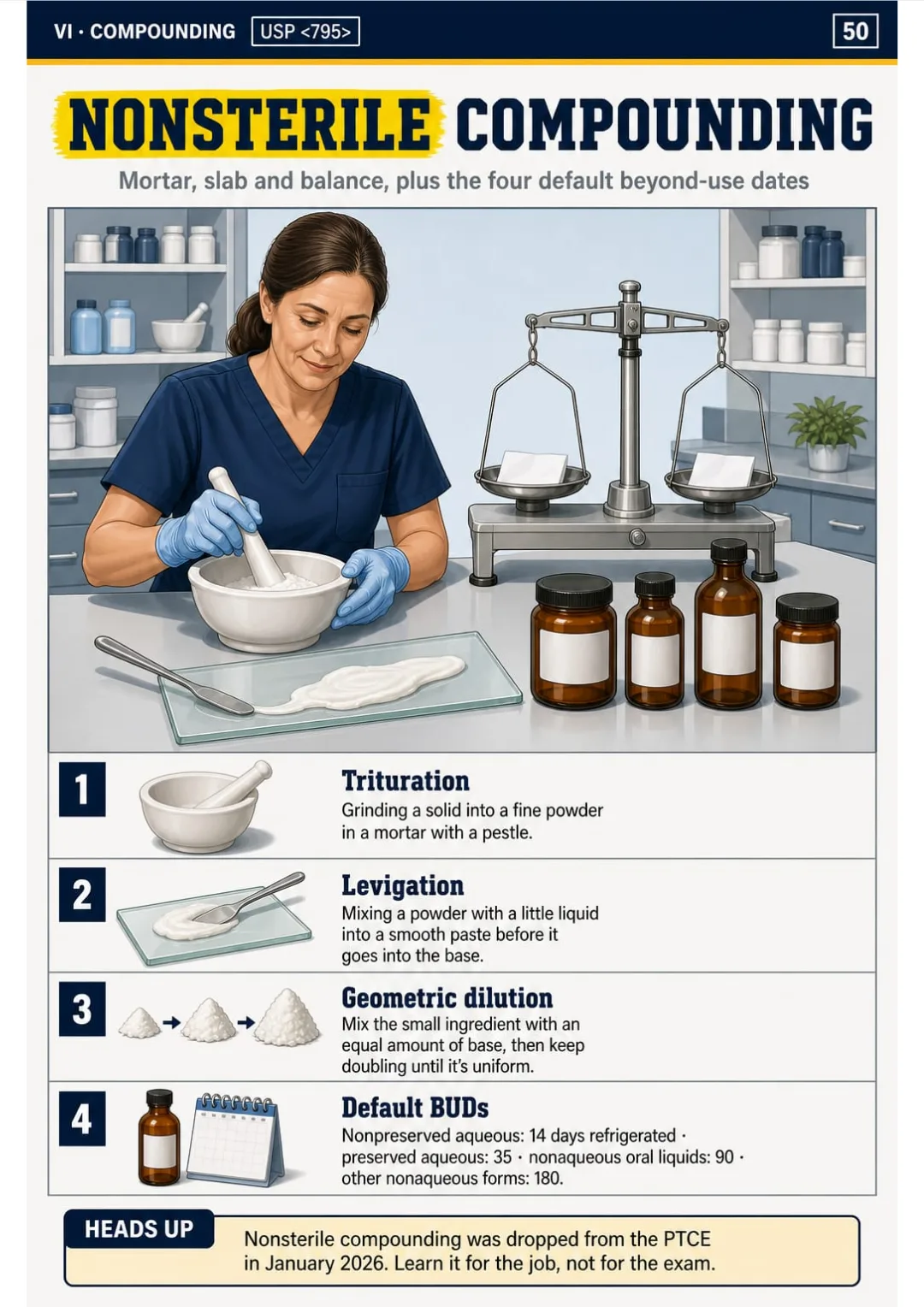
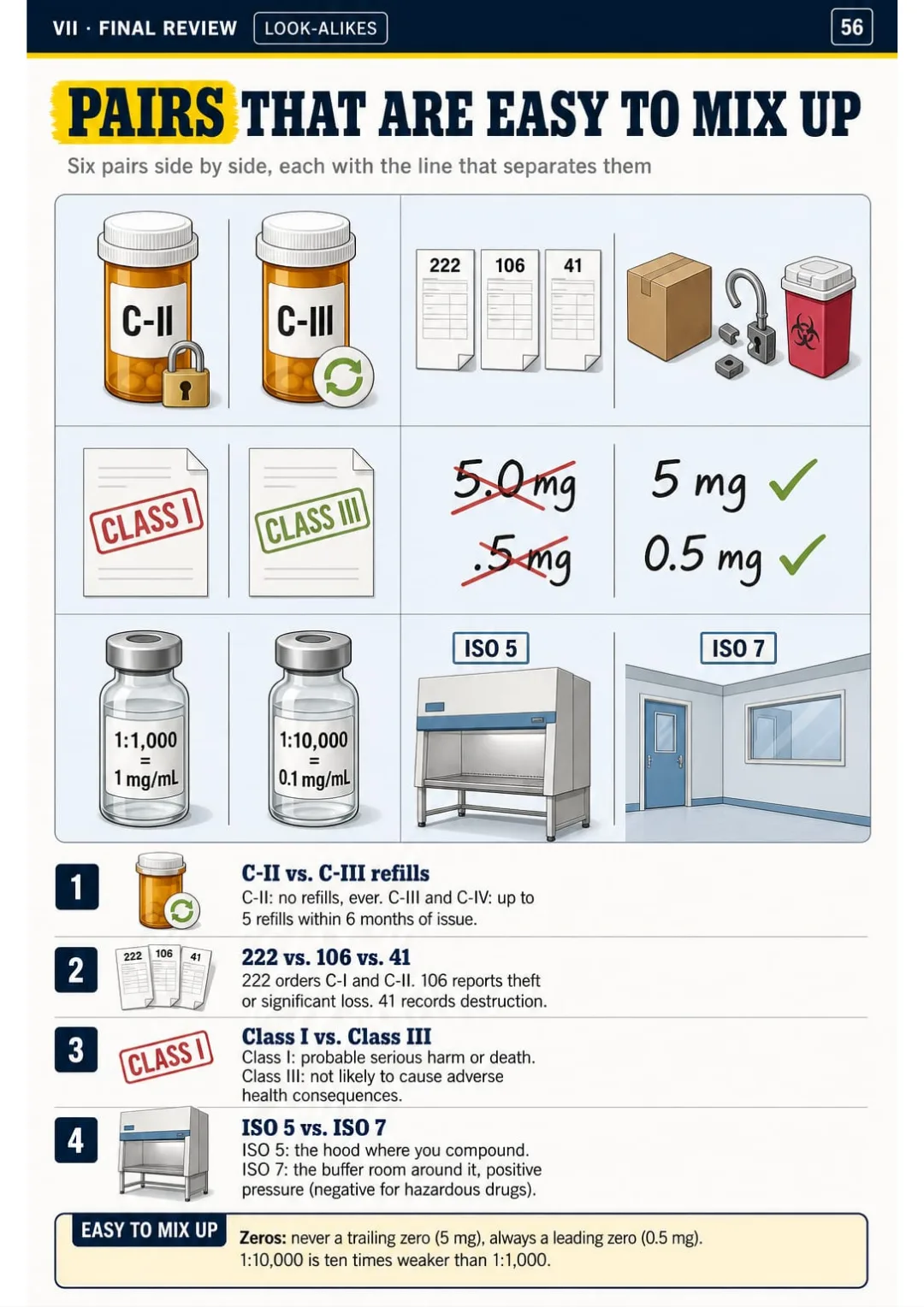
These are real pages from the book. The table of contents is the full one: 7 parts and 54 topics.
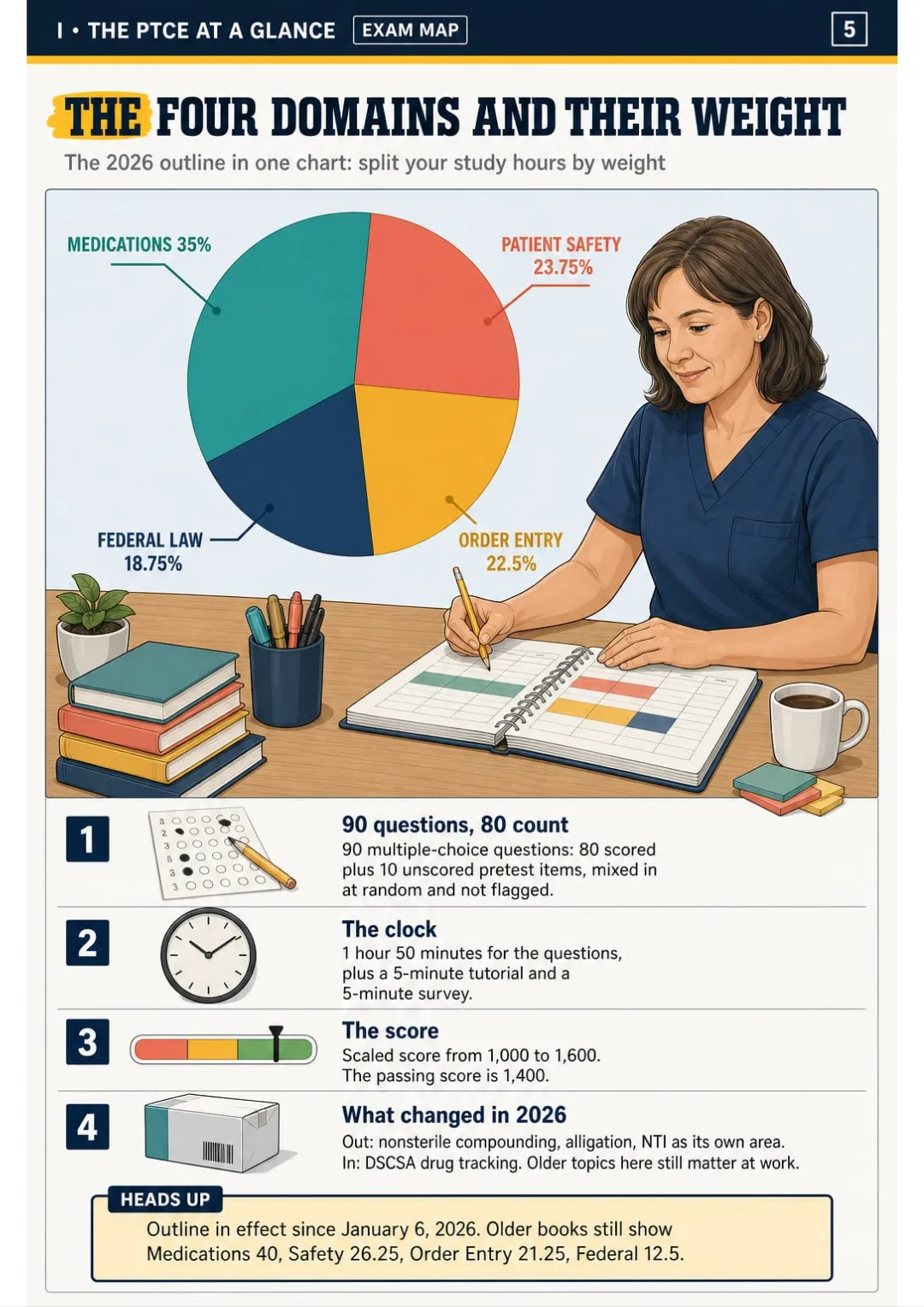
The four domains and what each one weighs, how to read what a question is asking, and when a federal rule gives way to your state board.
Drug name stems, the main drug families by body system, narrow therapeutic index drugs, classic interactions, dosage forms, storage temperatures and the Orange and Purple Books.
Nine federal laws on one timeline, the five schedules, refills, partial fills, transfers, DEA forms, checking a DEA number, pseudoephedrine limits, REMS, recalls and child-resistant packaging.
Do-not-use abbreviations, look-alike and sound-alike drugs, high-alert medications, where errors happen, how they're reported and what goes to the pharmacist.
What a valid prescription needs, sigs, the NDC, insurance and DAW codes, conversions, days supply, weight-based doses, percent strength, alligation and IV flow rates.
Nonsterile compounding, sterile categories and beyond-use dates, the cleanroom map, garbing order, hood work and hazardous drugs.
The pairs that are easy to mix up, every key number on one page and a plan for your last week and exam day.
At the end of the book: A final review with the easy-to-mix-up pairs, every key number on one page and a plan for your last week
Price US$ 27 US$ 63
Every page ends with the mix-up the exam counts on.
A right number in the wrong unit is still a wrong answer: mL/hr is not gtt/min.
-azepam and -azolam are both benzodiazepines: lorazepam, alprazolam. Same class, different ending.
Free with your book today.
Check yourself after each part, with explained answers that show why the right option is right and where the wrong ones try to catch you.
All the prescription abbreviations on one printable sheet, so you can translate a sig at a glance while you study or at the counter.
📄 This is a digital PDF book sent to your email: nothing is printed or shipped.
PDF by email: We email you Pharmacy Technician: The PTCE as a PDF, together with the two free books. It's a single payment: no installments, no extra charges.
Try Pharmacy Technician: The PTCE for 30 days, bonus books included.
We refund everything if the file won't open, if the book isn't what you see here, if you were charged twice or if the email doesn't arrive. Just email us.
You pay once. No subscriptions.
Pick the one that sounds like you.

You get the whole outline in the order it builds. Start with Drug Name Stems and you can place a new drug in its family before the pharmacology chapter even begins.

You put names and rules to what you do every shift, like why .5 mg is always written 0.5 mg and which DEA form reports a theft.

You review the four domains by what they weigh, run every calculation with the same steps and finish with the Numbers page and the pairs that are easy to mix up.
Quick answers before you decide.
It works from zero, and each page is short enough to skim if you already know the topic. If only math or law still feels shaky, go straight to Part V for calculations or Part III for federal law.
The book and the two bonuses come as PDFs by email. You can read them on your phone, tablet or computer.
Yes. You pay once and the PDFs are yours. There's no subscription.
No. It's study material that sits next to your program, the pharmacist who supervises you and official PTCB prep. It doesn't give you a certificate or CE hours, it doesn't promise a score, and it never gives dosing guidance for a real patient.
From the PTCB PTCE content outline, the FDA and the Food, Drug, and Cosmetic Act, DEA rules in 21 CFR Parts 1300–1321, USP chapters <795>, <797> and <800>, and the ISMP and Joint Commission safety lists. Every key number is cited to its source.
The domain weights follow the PTCE content outline PTCB publishes today: Medications 35%, Patient Safety 23.75%, Order Entry 22.5% and Federal Requirements 18.75%. You can check them against the outline on the PTCB website. The compounding pages follow the revised USP <795> and <797> and USP <800>.
The PTCE tests federal rules, and that's what the book teaches. Where your state board can be stricter, the page says so, so you know what to check with your board.
Yes. Every page prints, and so does the Abbreviations Cheat Sheet, which is made to keep at your desk.
You have 30 days. We refund everything if the file won't open, if the book isn't what you see on this page, if you were charged twice or if the email doesn't arrive: just email us.
It's a PDF: read it on screen or print it
One book, one page per topic and 30 days to try it.
Start with the first page.
One-time payment: US$ 27 · Guarantee: 30 days · PDF by email
I want Pharmacy Technician: The PTCE for US$ 27📄 This is a digital PDF book sent to your email: nothing is printed or shipped.